

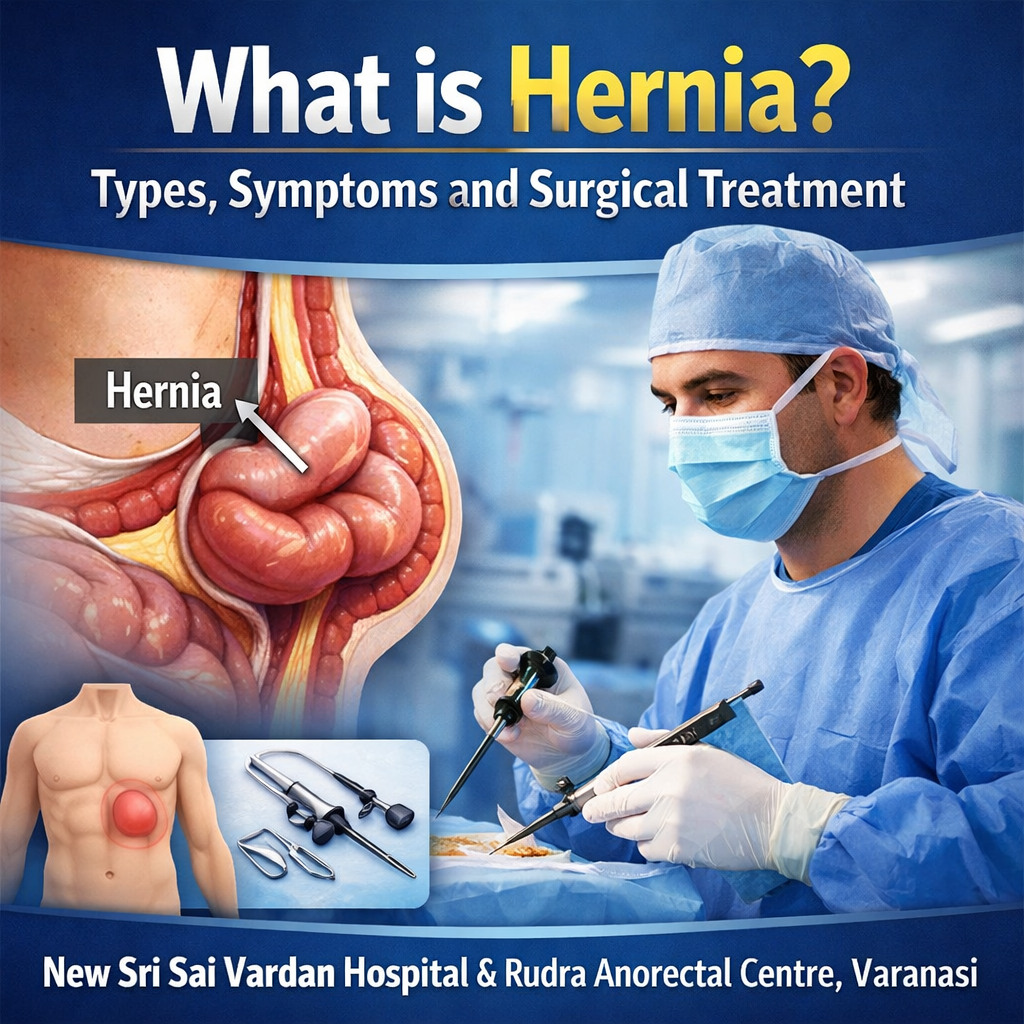
Hernia is a common medical condition that occurs when an internal organ pushes through a weak spot in the surrounding muscle or tissue. It can cause discomfort, pain, and complications if left untreated.
Many patients search online for “hernia surgery in Varanasi,” “best doctor for hernia near me,” or “hernia treatment hospital” when they experience swelling or pain in the abdomen or groin.
At New Sri Sai Vardan Hospital & Rudra Anorectal Centre, Varanasi, patients receive advanced diagnosis and effective treatment under the expert care of Dr. S.S. Rathore, known for his patient-centric surgical approach.
What is a Hernia?
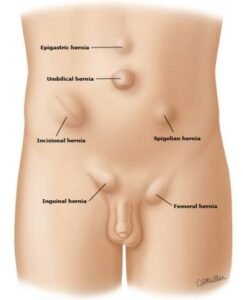
A hernia occurs when a part of an internal organ (usually intestine) protrudes through a weak area in the muscle wall. It can appear as a visible bulge and may become more noticeable while coughing, bending, or lifting heavy objects.
Hernias do not heal on their own and usually require medical or surgical treatment.
Types of Hernia
There are several types of hernia, depending on the location:
1. Inguinal Hernia (सबसे आम)
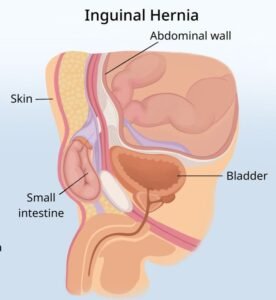
This is the most common type of hernia, occurring in the groin area.
Key Features:
Bulge near groin or scrotum
Pain while lifting or coughing
More common in men
2. Umbilical Hernia
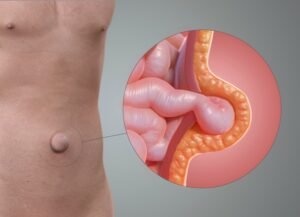
This type occurs near the navel (belly button).
Key Features:
Swelling around the navel
Common in infants and adults
May increase with pressure
3. Incisional Hernia
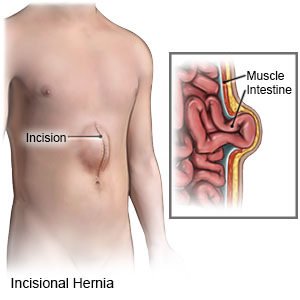
Occurs at the site of a previous surgical incision.
Key Features:
Bulge near surgical scar
Weakness in abdominal wall
Common after abdominal surgeries
4. Femoral Hernia
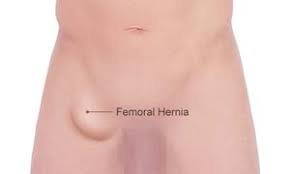
A less common but serious type of hernia, seen mostly in women.
Key Features:
Bulge near upper thigh or groin
Risk of complications if untreated
Requires early diagnosis
Symptoms of Hernia
Common symptoms include:
Visible swelling or lump
Pain or discomfort (especially while lifting or bending)
Burning or aching sensation
Feeling of heaviness in abdomen
Increased pain during physical activity
If you notice these symptoms, consult a hernia specialist in Varanasi immediately.
Causes of Hernia
Hernia develops due to muscle weakness and increased pressure.
Common Causes:
Heavy lifting
Chronic cough
Constipation
Obesity
Previous surgery
Aging and muscle weakness
Diagnosis of Hernia
At New Sri Sai Vardan Hospital, accurate diagnosis is done using:
Physical examination
Ultrasound
CT scan (if required)
Early diagnosis helps prevent complications such as strangulation.
Hernia Surgery Treatment
Surgery is the most effective and permanent treatment for hernia.
Types of Hernia Surgery:
1. Open Hernia Surgery
Traditional method
Small incision made
Mesh used to strengthen the area
2. Laparoscopic Hernia Surgery
Minimally invasive
Faster recovery
Less pain and smaller scars
At New Sri Sai Vardan Hospital & Rudra Anorectal Centre, modern surgical techniques ensure safe and effective treatment.
Why Choose New Sri Sai Vardan Hospital & Rudra Anorectal Centre?
Patients searching for “best hernia surgeon in Varanasi” trust for:
Accurate diagnosis
Advanced surgical expertise
Minimally invasive techniques
Patient-focused care
Faster recovery outcomes
Risks of Ignoring Hernia
Untreated hernia can lead to serious complications:
Increased size of hernia
Severe pain
Intestinal blockage
Strangulated hernia (medical emergency)
Timely surgery is important to avoid these risks.
Recovery After Hernia Surgery:
Most patients recover within a few weeks
Avoid heavy lifting initially
Follow doctor’s advice
Maintain healthy lifestyle
Conclusion:
Hernia is a common but treatable condition. Early diagnosis and timely surgery can prevent serious complications and improve quality of life.
If you are experiencing symptoms of hernia, consult Dr. S.S. Rathore at New Sri Sai Vardan Hospital & Rudra Anorectal Centre, Varanasi for expert evaluation and advanced surgical treatment.